For a successful MRI scan, complete stillness is essential, which can be difficult for some patients - such as children, highly anxious individuals, or adults with claustrophobia. In such cases, an MRI under sedation provides a solution. The procedure is performed by a specialist anesthesiologist, ensuring the patient’s comfort and high-quality imaging.
When is an mri under sedation recommended?
Before the procedure, the patient receives detailed information, and all health conditions, previous anesthesia experiences, and any allergies are reviewed with the medical team.
The sedation is performed exclusively by a specialist physician, under continuous monitoring and following the most advanced safety protocols
While the patient remains calm and motionless during the scan, the accuracy and quality of the MRI images are greatly enhanced
After the procedure, the patient can return to their daily activities following a brief observation period

Advantages of MRI Under Sedation:
- Painless, stress-free procedure
- Excellent image quality and accurate diagnosis even without patient movement
- No radiation exposure, making it safe for children
- Suitable for claustrophobic or anxious patients, as well as young children
Sedated MRI is performed only when medically indicated and with all necessary precautions. Like any medical procedure, sedation carries potential risks; however, proper preparation, a thorough health assessment, and continuous specialist supervision minimize the likelihood of complications. Patients must always inform the medical staff about their current health status, medications, and any previous experiences with anesthesia.
What is commonly referred to in everyday language as a “sedated MRI” actually involves superficial sedation. This form of superficial sedation, technically termed “sedation,” allows us to induce a state in which the patient’s consciousness is suppressed, without the need for intubation (i.e., securing the airway), thereby avoiding the risks associated with deep sedation. However, this state is not equivalent to deep sedation, in which patients are completely immobile and unconscious. Consequently, during superficial sedation, patients may exhibit involuntary movements, swallowing, or hiccups. If the anesthesia team determines that further deepening of sedation cannot be safely achieved without securing the airway, these movements cannot be fully prevented, which may, in some cases, result in an MRI study that is of limited diagnostic quality or entirely non-diagnostic. Unfortunately, this risk cannot be completely excluded in advance. If your examination proves to be of limited or non-diagnostic quality for these reasons, we can offer compensation at a reduced fee; however, the anesthesia fee will still apply in such cases.
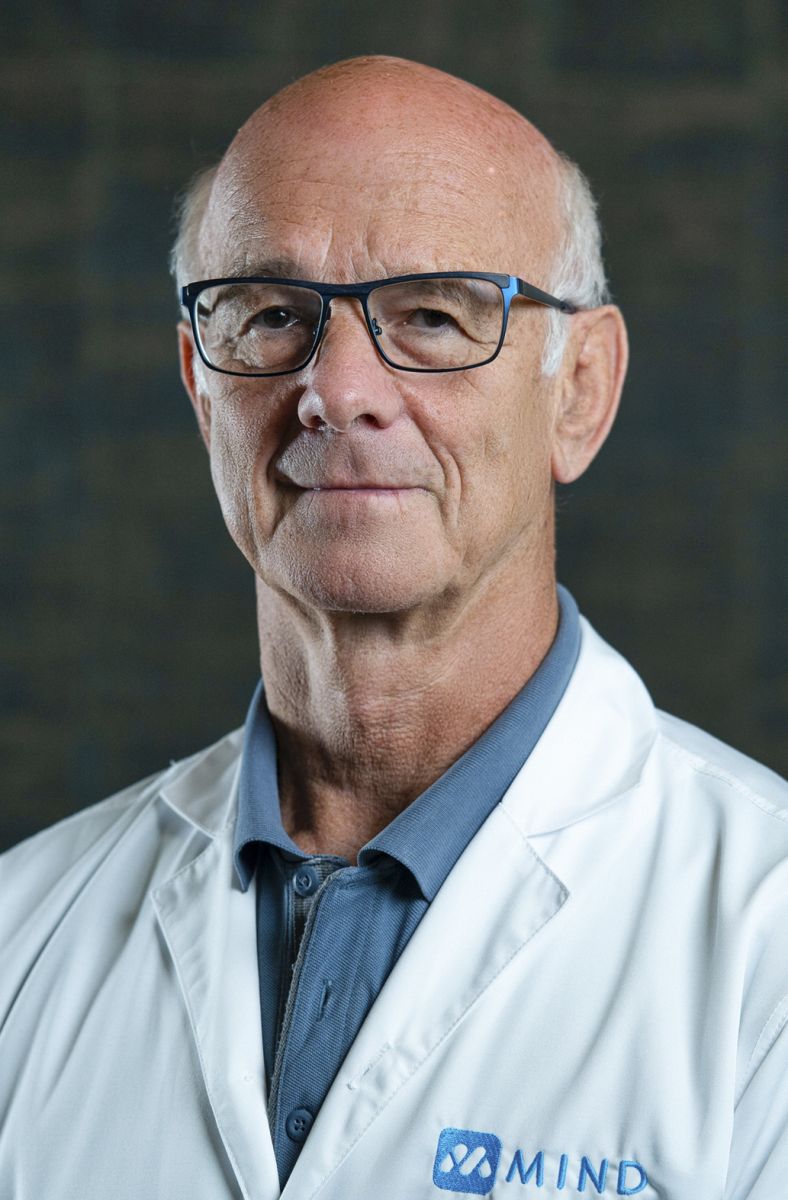
In the following video, Dr. Gábor Rudas, Head of MRI at MiND Clinic, discusses the details and indications of the procedure.
You can schedule an appointment by calling +36 1 600 50 90
Dr. Rudas Gábor
MR Specialist Manager